
Did Marilyn Monroe Save the Valley?
There’s an urban myth about Marilyn Monroe that dodges every hypersexualized trope we slap onto midcentury Hollywood. Long before JFK, long before Some Like It Hot, the native Angeleno may have saved the Valley from becoming LAX North. Is it true? Let’s crack open a few 818 files.
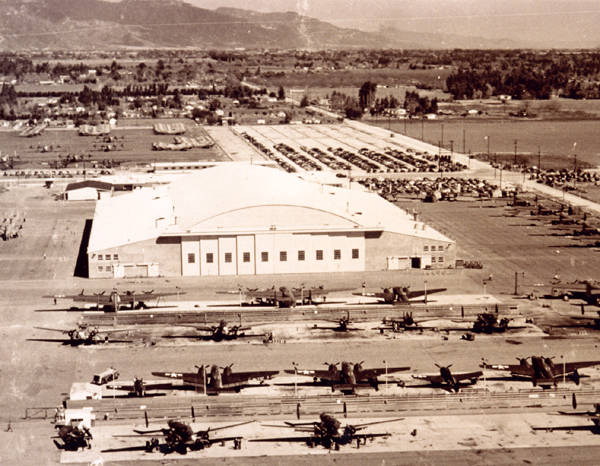
During the hum of World War II production, Norma Jeane, still years from the glamour of Marilyn, kept pace along a factory line building drones for the military at Metropolitan Airport, the previous name of Van Nuys Airport. Back then, the place was already a Southern California aviation hub. Metropolitan Airport opened in 1928, only a quarter century after the Wright Brothers took flight, birthing an industry. Mines Field, way down in the dunes near the ocean, opened two months earlier on a sleepy 640 acres that would later be known as LAX.
In its early years, Metropolitan Airport was a magnet for record breakers. In 1929, a man flew solo for 37 hours and a woman topped him at 42. A year later Pancho Barnes pushed her wire-braced racer to 196 miles an hour and broke Amelia Earhart’s speed record. When asked how she felt, Barnes reportedly said: “I feel like a sex addict in a w—re house with a pocket full of $100 bills,” proving she had a way with both airplanes and the English language. Hollywood noticed the buzz and possibilities inherent in the airport. Gene Autry, Cecil B. DeMille and Howard Hughes all used the airport while films like Casablanca and Hell’s Angels shot scenes among its hangars.
Then came World War II. The feds bought the airport in 1942 from its private owners and turned it into Van Nuys Army Airfield. Fighter pilots trained on P-38 Lightnings while factories churned out parts under a veil of wartime secrecy. On one of those lines was a young Angeleno with a knockout smile who had no clue she was weeks from being discovered.
Norma Jeane’s childhood was a tragic conflagration. Her mother and grandparents cycled through mental institutions, suffering acute breakdowns. She bounced from foster home to foster home, enduring abuse and isolation, before marrying a neighbor’s son at 16 just to stay afloat. She found work at the Radioplane Munitions Factory in Van Nuys, spraying fire retardant on parts while her husband shipped out as a Merchant Marine.
In late 1944, everything shifted. Army photographer David Conover showed up on a morale-boosting assignment, snapping shots of women doing their part for the war effort. He spotted Norma Jeane on the line and asked her to step in front of the lens. Cameras, any photographer can tell you, don’t lie, they reveal. Modeling gigs followed, then a Fox contract in 1946. Before long she’d left her husband, outrun her old life and stepped into the world as Marilyn Monroe.
Acting was her route to freedom from a life defined by instability and abject disappointment. “I didn’t like the world around me because it was kind of grim,” she said later. Movies felt like an escape and a career steeped in a nom de guerre certainly applies to someone looking for an alternate reality. Meanwhile, both city airports were growing. In 1949, L.A. took control of Metropolitan Airport, renamed it the San Fernando Valley Airport and watched Mines Field evolve into Los Angeles International Airport as the city swelled to 1.9 million people.
(Fun fact: The X in LAX doesn’t signify anything. The original code was simply “LA” but as aviation exploded, runways multiplied and the X got slapped on to keep things in order for pilots and passengers around the world.)
By mid-century, L.A. had a choice to make. If the city wanted to hit big-league status it needed a modern gateway. Valley boosters pushed hard. The West Van Nuys Chamber of Commerce championed the cause of the Van Nuys Airport and was often referred to as “The Airport Chamber” as did Lockheed and General Motors executives. The airport, they reasoned, sat in the geographic center of the city. It connected industries, jobs and was already humming. Why pick some scrubby patch of barren land by the beach?
This was an epochal moment of change for planes, and expansion would be key — and nearly impossible to do in the center of a bustling city center, especially when NIMBYism appears. Maybe even from Marilyn.
Jets were coming. Bigger, louder, heavier aircraft like the Boeing 707 and DC-8 needed long runways and long margins for error. LAX had room to build and funnel flights over an ocean, a key difference than approaching planes over Valley homes. The natural landscape of the San Fernando Valley, the growing subdivisions and a lot of homeowners created a perfect storm of angst for those who didn’t want their new ranch houses rattling, especially after many experienced the machine gun horrors implicit in war.
Today, we associate the post World War II housing boom as a sign of progress and futurism that gave the San Fernando Valley its charm and political muscle. But growth breeds friction. Zoning officials in the 1950s green lit 150 new homes around Van Nuys Airport and approved the Sherman Way underpass so the main runway could stretch from 6,000 to 8,000 feet.
The more the Valley grew, the more pushback the airport got. A small plane crashed through the roof of a Northridge home in the mid-50s. No one was home but the reaction was loud. The Valley Times ran constant stories on residents complaining about late-night flights, low approaches and training runs.
And then there’s the legend. According to urban legend, Marilyn Monroe supposedly joined the quiet no-thanks chorus. Nothing splashy – no hearings, no microphones, no formal votes or public comment. Just the usual Hollywood influence of the era, where a well-timed call carried more weight than any zoning memo. Marilyn Monroe, now steeped in fame and intuitive knowledge of Van Nuys Airport, possessed the perfect blend of knowledge and platform.
Was she trying to defeat the noise? Impending traffic? Was she pining for a simpler time that might have been slipping away as Los Angeles boomed to life? Studio executives lived in the Valley. Power brokers lived there too. Their presence didn’t start the opposition, but it sure didn’t hurt it.
In the end, the pressure worked. By the early 1950s, L.A. abandoned the idea of making Van Nuys the main airport, though the boomerang talk of expansion/no expansion continues to this day. Still, LAX nets the international traffic and many more local headaches. Van Nuys slid into its permanent role as a reliever airport. It’s still one of the busiest general-aviation fields on earth but the giant international hub version of its future never happened.
Maybe, just maybe, we can thank Marilyn Monroe for that.
Jeremy Oberstein is a proud Valley resident. Let him know your favorite Valley history story at jeremy@10thstcomms.com


